In this article
Imagine being asked a simple question:
Where does your organisation process personal data, why is it processed and who is responsible for it?
For many organisations, answering this question requires information from HR, IT, finance, marketing and external service providers.
A Record of Processing Activities, commonly called a RoPA, helps bring this information together.
What Is a RoPA?
A RoPA is a structured record describing how an organisation processes personal data.
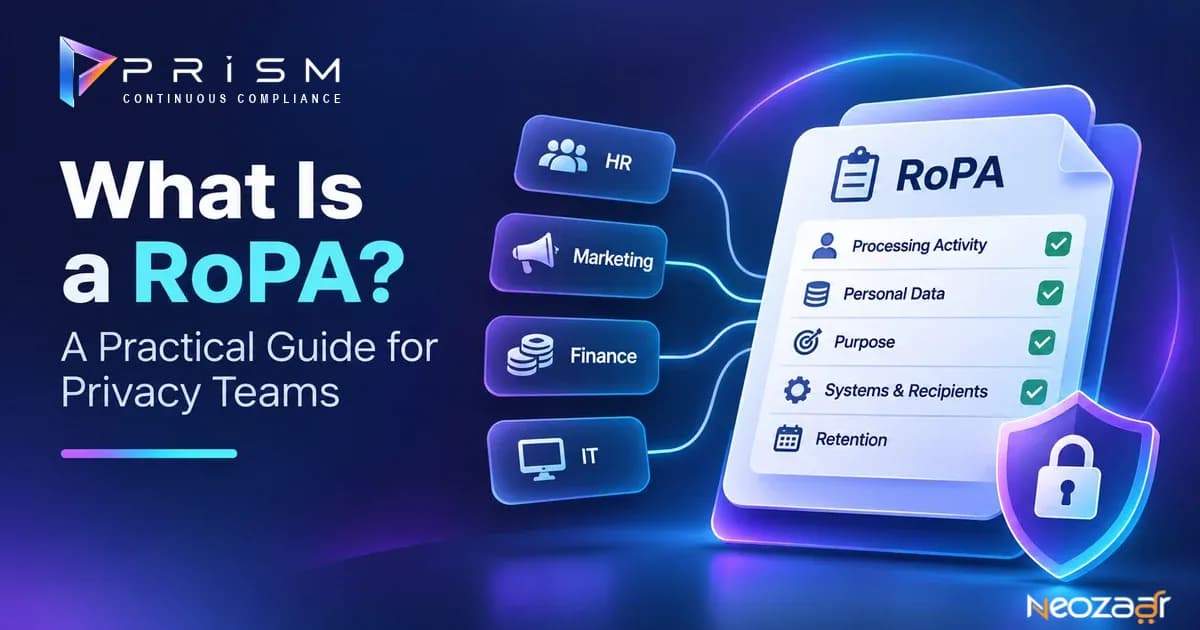
It connects business activities to the information collected, the purpose of processing, the systems involved and the people responsible.
Under GDPR Article 30, certain controllers and processors have explicit record-keeping obligations, subject to applicable exceptions.
India's DPDPA does not impose an identical, universally applicable Article 30-style RoPA requirement. Nevertheless, maintaining a processing inventory can be a valuable accountability practice for DPDPA readiness.
What Information Should a RoPA Contain?
A useful record typically includes:
Processing activity and business purpose
Responsible department and process owner
Categories of individuals
Categories of personal data
Relevant lawful processing grounds
Applications and storage systems
Internal and external recipients
Retention and deletion arrangements
International transfers, where applicable
Relevant technical and organisational safeguards
The required fields should be adapted to the organisation's applicable legal obligations.
Build Your RoPA Around Business Activities
Avoid beginning with a list of software applications.
Start with the activity that explains why personal data is being used.
Example: Employee payroll
Activity: Monthly payroll processing
Business owner: Human Resources and Finance
Personal data: Employee identity, salary and banking information
Systems: HRMS, payroll application and banking interfaces
Recipients: Authorised internal users and relevant service providers
Retention: Based on applicable employment, tax and record-keeping requirements
This structure allows reviewers to understand how the business process operates rather than simply where information is stored.
Why IT Inventories Are Not Enough
IT may know which cloud applications are deployed. It may not know why marketing uploads a customer list or how finance processes vendor contact details.
A reliable RoPA therefore requires both system-level information and departmental confirmation.
How Often Should a RoPA Be Updated?
A RoPA should reflect meaningful changes in processing.
Triggers may include a new CRM, an outsourced HR provider, a different data collection purpose or a change in retention practices.
Assign an accountable owner and introduce a regular review cycle.
How PrismGRC Can Help
PrismGRC supports the organisation of processing information through its RoPA and privacy governance workflows.
Its self-assessment provides an entry point for identifying departmental gaps before developing a more complete processing inventory.
Connected system data can provide supporting information, while business owners validate purposes, recipients and lawful grounds.
Turn Data Visibility Into Accountability
A RoPA is more than a register. It is a way to connect business operations, personal data and governance responsibilities.
Start Your Free Privacy Self-Assessment at prismgrc.co.
Frequently asked questions
Neozaar Team
Insights on cloud marketplaces, security and enterprise IT from the NeoZaar team.