

In this article
- Why ISO 27001 Matters to Software and SaaS Vendors
- Step 1: Define the Scope Around the Service
- Step 2: Connect Risks to Controls
- Step 3: Make Ownership Clear
- Step 4: Keep Evidence Ready to Support the Story
- Step 5: Maintain the ISMS as the Service Changes
- How Enterprise Buyers View the Certificate
- How PrismGRC Supports Readiness
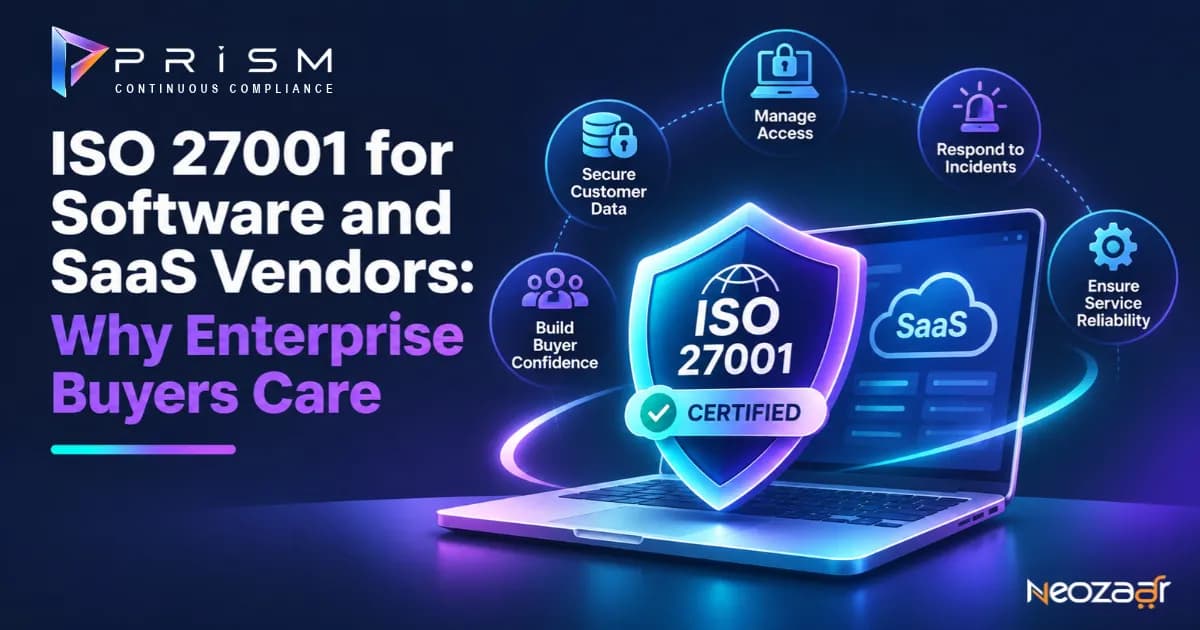
When an enterprise evaluates a software or SaaS provider, it is assessing more than the product. It is also considering how the vendor protects information, manages access, responds to incidents and keeps the service dependable.
ISO/IEC 27001 gives vendors a structured way to manage those responsibilities. For enterprise buyers, certification can provide an independent signal that the vendor’s information security management system has been assessed against a recognised standard. ISO describes certification as one way to demonstrate to customers and stakeholders that an organisation is committed and able to manage information securely. www.iso.org
That signal can help establish confidence during procurement and vendor reviews. It is not a guarantee that incidents will never happen, or that every customer requirement is automatically met.
Why ISO 27001 Matters to Software and SaaS Vendors
A SaaS provider may host customer data, connect to business systems and support important workflows. Buyers need to understand how those responsibilities are managed—not just what security features appear on a product page.
Certification gives vendors a recognised way to demonstrate that information security is managed through a defined system. It can support customer due diligence and help make security conversations more specific. Where a buyer requires certification, it may also be a condition of moving forward with a procurement process. www.iso.org
The value comes from both the external assurance and the discipline of maintaining the ISMS behind it.
Step 1: Define the Scope Around the Service
The certification scope tells a buyer which parts of the organisation and service have been assessed. For a software or SaaS vendor, that may include the application, cloud environment, development and support processes, and the teams responsible for operating them.
A clear scope helps the buyer understand whether the certification is relevant to the service under review. The certificate should be read in context: it applies to the defined ISMS scope, rather than automatically covering every product, location or business activity.
Step 2: Connect Risks to Controls
The control environment should reflect the risks associated with the service: access to customer data, vulnerabilities, service disruption, suppliers and changes to production systems.
The Statement of Applicability (SoA) records the controls considered necessary, why they are included, their implementation status and the rationale for excluding any Annex A controls. Necessary controls outside Annex A should also be included. committee.iso.org
For a buyer, this helps show that the control set is connected to the vendor’s risks and operating context.
Step 3: Make Ownership Clear
Security controls often cross teams. IT may manage access, Engineering may handle secure development, Security may coordinate incident response, and Procurement may oversee suppliers.
Clear ownership helps the vendor explain how these controls work and who is accountable for them. It also makes it easier to provide consistent answers during customer reviews.
Step 4: Keep Evidence Ready to Support the Story
A certificate is a useful starting point for a buyer’s review. They may still ask how specific controls operate—for example, how access is reviewed, vulnerabilities are handled or incidents are escalated.
Current, organised evidence helps the vendor respond with clarity. It also gives the organisation a better view of how its controls are working between audits.
Step 5: Maintain the ISMS as the Service Changes
SaaS services evolve: new features launch, infrastructure changes, suppliers are added and customer requirements shift. The ISMS needs to keep pace.
Internal audits and management reviews help teams assess performance, identify gaps and track improvements. ISO/IEC 27001 requires internal audits at planned intervals. www.iso.org
How Enterprise Buyers View the Certificate
Enterprise buyers can see ISO 27001 certification as a recognised assurance signal: an independent assessment of the vendor’s ISMS within a defined scope. They may also consider whether the scope covers the service they plan to use, who issued the certificate and what additional evidence their own risk review requires.
In other words, certification can strengthen the trust conversation, while the buyer’s own due diligence determines whether the vendor fits that specific engagement.
How PrismGRC Supports Readiness
PrismGRC helps teams assess controls, organise evidence, assign ownership and track remediation. Its self-assessment provides a structured view of readiness gaps and helps teams prioritise next steps.
Start your Free Security and Compliance Self-Assessment at prismgrc.co.
- #Enterprise Procurement
- #ISMS
- #ISO 27001
- #PrismGRC
- #SaaS Security
- #Software Vendors
- #Vendor Risk Management
Neozaar Team
Insights on cloud marketplaces, security and enterprise IT from the NeoZaar team.